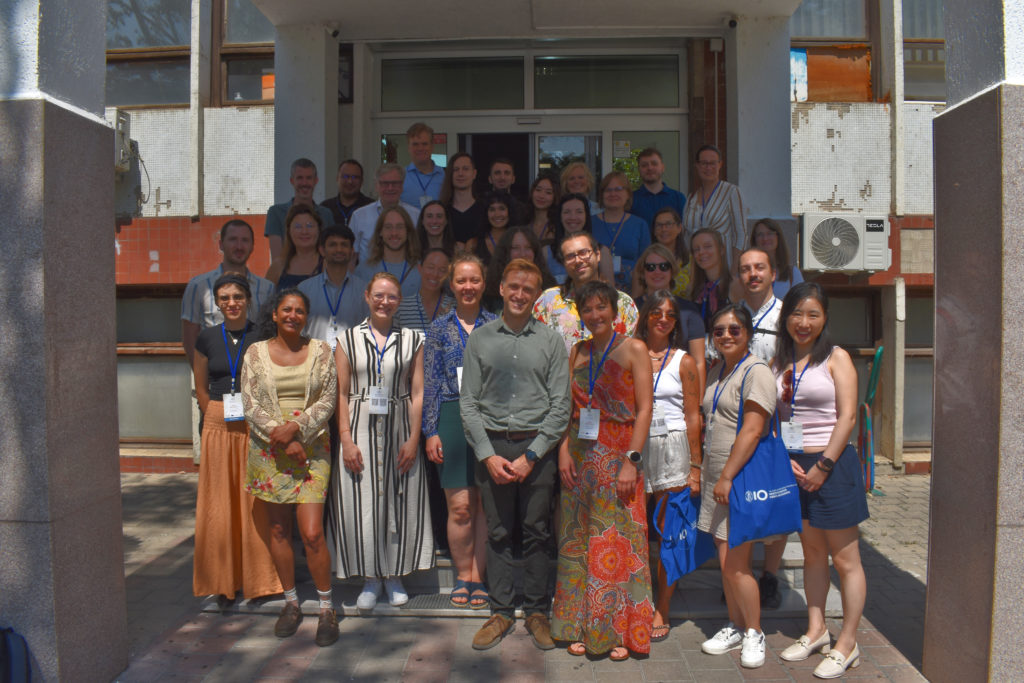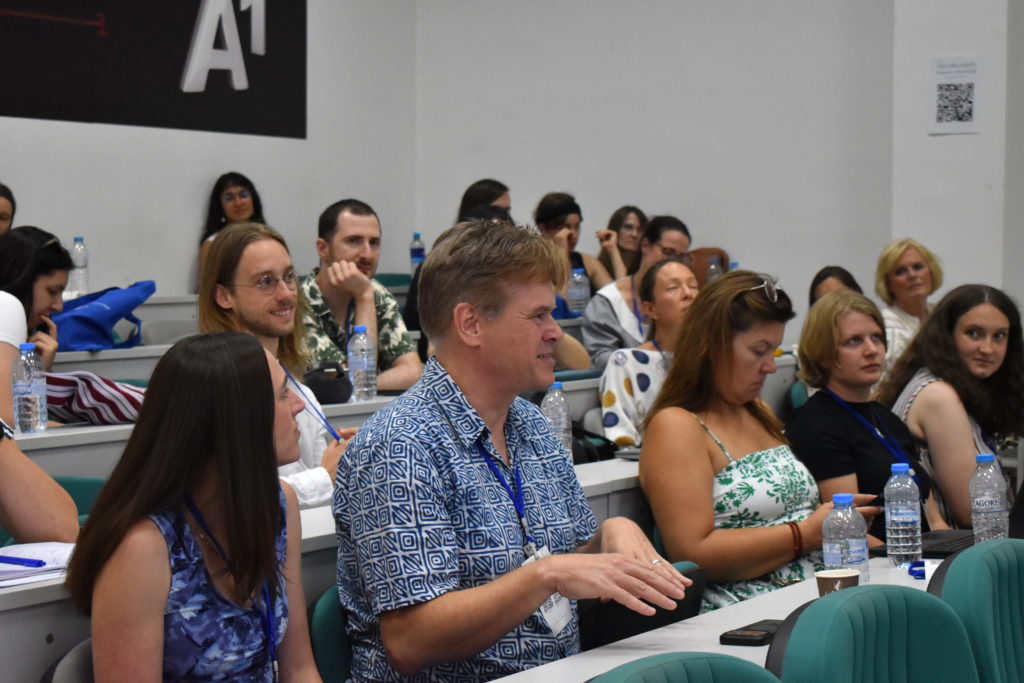
During two very hot days in Skopje, the conference participants were spoiled with both high-quality scientific content and thoughtful planning by the local organizers, Sasho Gramatikov and Zorica Karapancheva. Even though it was the final conference, it did not feel like the end of MultiplEYE – instead, the atmosphere was energizing, and there was both a great sense of achievement and momentum.
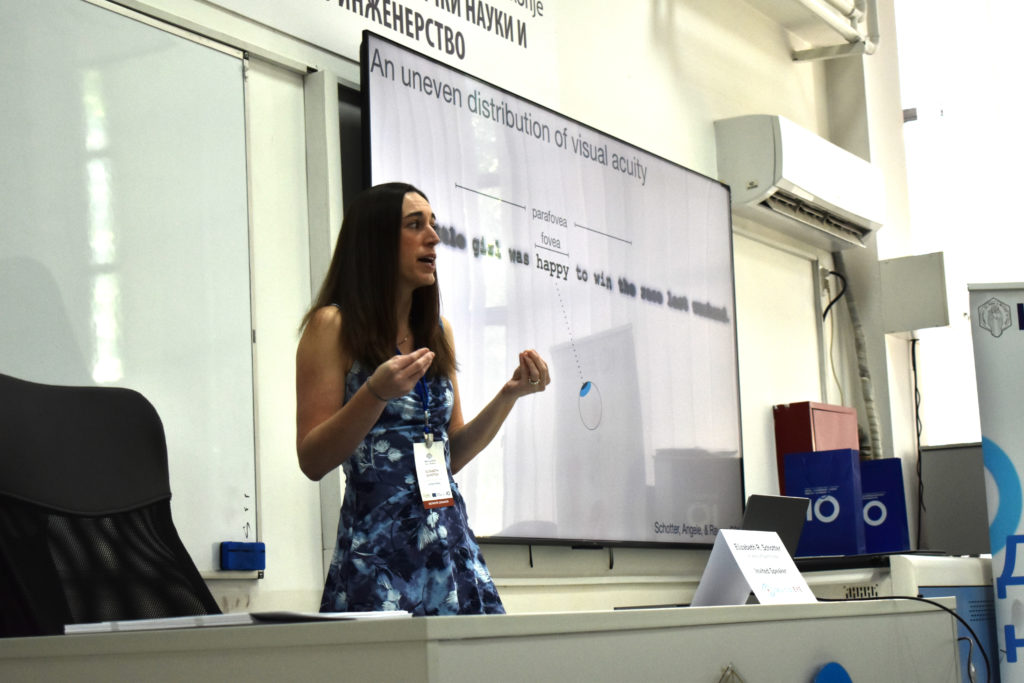
The talks and posters – and especially the excellent keynote talks by Elizabeth Schotter, Noam Siegelman, Ekta Sood, and Jochen Laubrock – expanded what we know about eye-tracking-while-reading and its applications. The topics of the keynote talks were at the methodological and theoretical cutting edge of research and spanned from insights from the reading behaviour of deaf readers over statistical learning as applied to eye-tracking to the integration of NLP and eye movements and the operationalization and use of predictability in reading.
In two dedicated MultiplEYE sessions, members of MultiplEYE presented various aspects of our collective project. The enormous efforts poured into MultiplEYE were awe-inspiring, as was the rich output in terms of resources, data, and infrastructure. The MultiplEYE session talks covered the multilingual annotation of the texts, the development and implementation of the comprehension questions, the psychometric test battery, the preprocessing pipeline, and EyeStore, an open repository where all the data and metadata from the MultiplEYE labs will be made accessible to interest researchers. It was very clear how much thought and discussion went into every single decision, from distractor spans to filtering options to co-reference annotations.
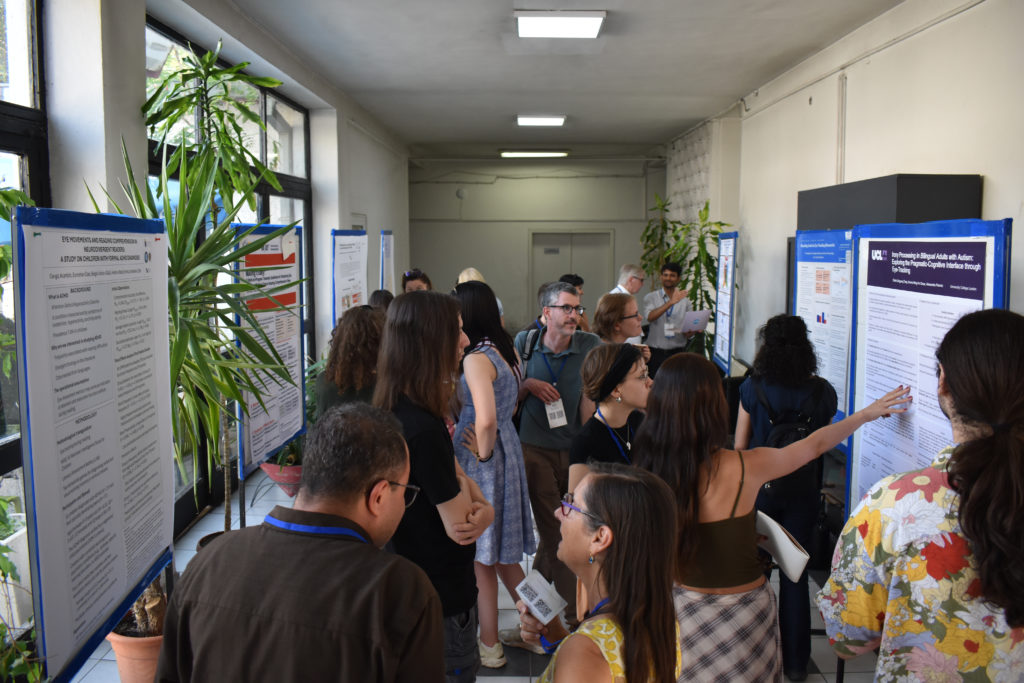
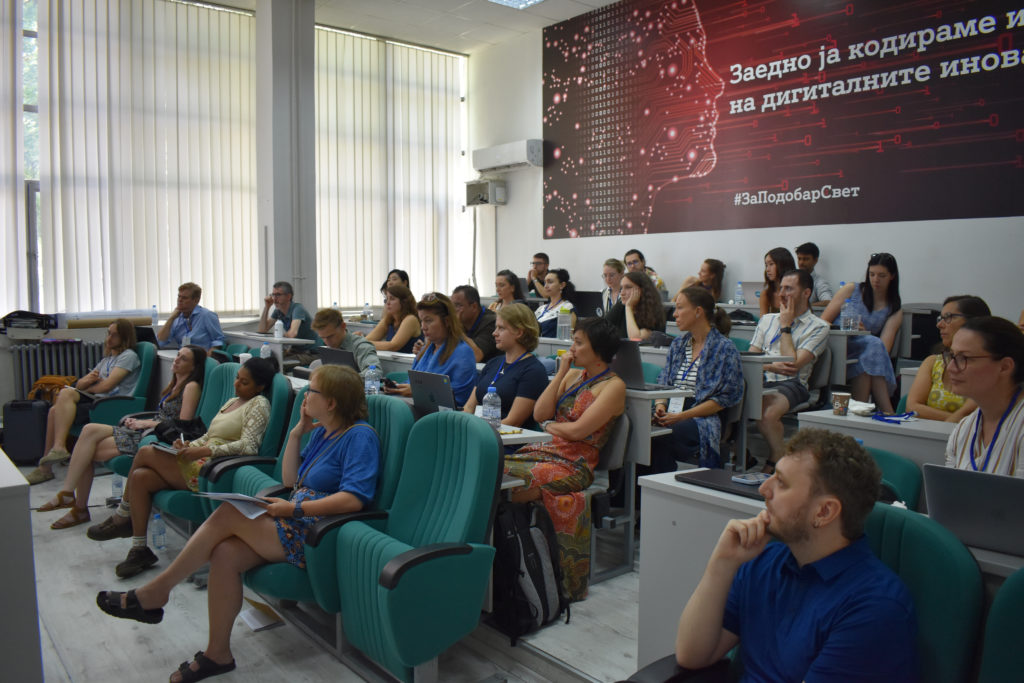
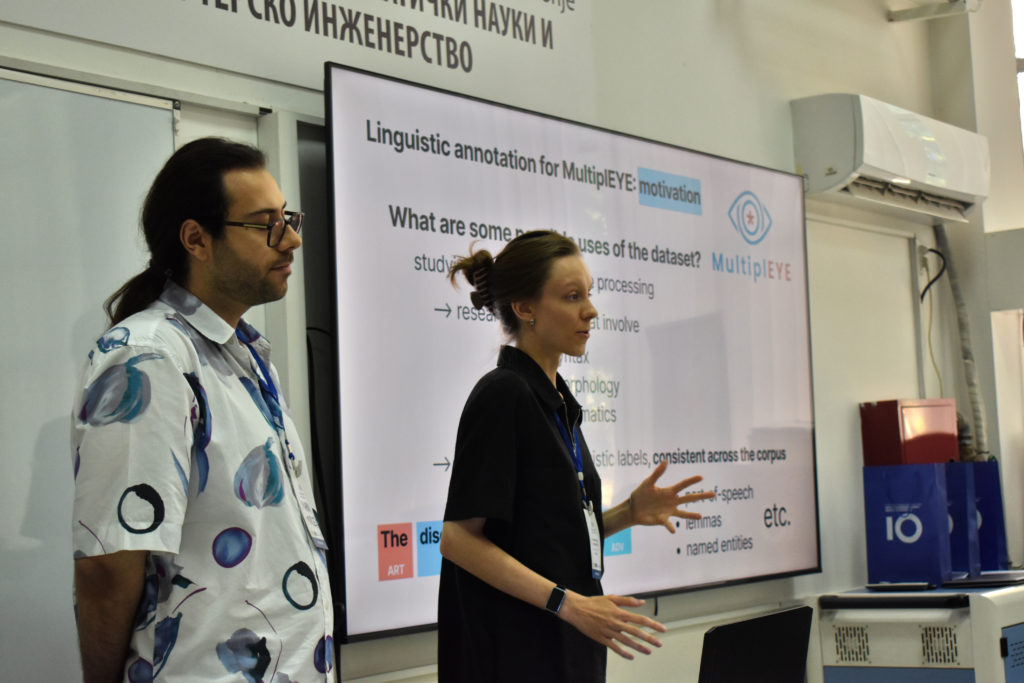
Even with the focus on the MultiplEYE project, the variety of the other talks and posters was also inspiring – covering as diverse topics as reading in aphasia, coherence illusions, modelling of eye movement data, fNIRS measurements-while-reading, text simplification, irony processing, and much more. Notably, several talks and posters presented analyses of MultiplEYE data, and it was wonderful to see all these fruits of our collective efforts over the last years!
Overall, the MultiplEYE final conference felt like a family reunion even though some had only met virtually before the conference. The local organisers treated us to a walking tour of the city and a lovely conference dinner at a traditional tavern with a Macedonian band – and dancing!
At the closing remarks, Professor Reinhold Kliegl made a very poignant and moving speech praising the MultiplEYE project. He said that he had worked in this field for 45 years and had seen a lot, but that he was still incredibly impressed by what MultiplEYE had achieved. He mentioned three ingredients that have been essential for MultiplEYE’s success: 1) the technical expertise and thoroughness, in large part due to the successful interdisciplinary integration, 2) the people – who are humble, competent and intelligent, and very welcoming and friendly, 3) the willingness to overcome political divides and resist the tendency for European countries to fly apart, and the important role especially East European countries like North Macedonia might play in counteracting this trend. MultiplEYE is a prototype project demonstrating that this is possible.